We promote
sustainable development
Camplus promotes sustainable development through a concrete, everyday commitment rooted in a clear vision: living is not just about building or managing spaces, but about caring for people, environments and the communities in which they are embedded.
For this reason, our approach to sustainability is built on non-standardisation. We plan and deliver projects that respect the urban, social and environmental context in which we operate, safeguarding existing spaces and enhancing the relationships that develop around our facilities.
For Camplus, sustainability is not an abstract goal but a shared responsibility that guides the company’s strategic, operational and organisational choices and is translated into measurable, transparent actions with a long-term perspective.
Extract from Sustainability 2024
The 2024 Sustainability Report marks a key milestone in Camplus’ journey. It is a tool that makes the company’s commitment to environmental, social and governance matters visible and verifiable.
OUR
FIGURES
0
1
2
3
4
5
6
7
8
9
0
1
2
3
4
5
6
7
8
9
0
1
2
3
4
5
6
7
8
9
-
% OF EMISSIONS INTENSITY0
1
2
3
4
5
6
7
8
9
-
% OF SELF-GENERATED ENERGY0
1
2
3
4
5
6
7
8
9
+
MW OF NEWLY INSTALLED PHOTOVOLTAIC CAPACITY0
1
2
3
4
5
6
7
8
9
Regeneration of existing areas and buildings
Camplus chooses to invest primarily in the regeneration of existing areas and buildings, driven by the belief that real change comes from revitalising what is already there.
This approach makes it possible to reduce land consumption, enhance the urban fabric and foster an inclusive form of environmental sustainability capable of generating tangible social benefits. New facilities, together with the staff and students who live in them, become an active part of local communities, helping to create widespread and long-lasting value.
The aim is to make all Camplus facilities increasingly sustainable over time, complementing the company’s building tradition with continuous efforts across three main areas
- Energy efficiency
- Adoption of new technologies
- 60% use of renewable sources for the self-consumption of generated energy
Energy efficiency and new technologies
Energy efficiency is one of the cornerstones of Camplus’ environmental strategy. It is pursued through:
- the use of state-of-the-art systems
- the adoption of Building Management Systems (BMS), which enable energy consumption to be monitored and optimised
- the implementation of resource reuse systems, in line with a principle of efficiency and responsibility
Since 2018, Camplus has embarked on a structured programme to improve the energy efficiency of its property portfolio, with targeted interventions focused in particular on older buildings (constructed up to 2012). To date, 7 properties have already undergone energy refurbishment through the gradual phase-out of gas, the installation of photovoltaic systems and the transition to fully electric solutions, in line with decarbonisation objectives and emissions reduction targets.
Use of energy from renewable sources
Camplus is increasingly investing in energy generation from renewable sources, which today accounts for over 10% of the facilities’ total energy needs and continues to grow.
The medium-term goal is ambitious: to achieve a zero-impact energy self-sufficiency model through the integration of self-generation, efficient technologies and the responsible management of energy consumption.
Sustainable projects
Photovoltaics in Calabria
Camplus has launched a major ground-mounted photovoltaic project in Calabria, in Petilia Policastro (KR), representing a decisive step in its decarbonisation strategy.
The project includes:
- the use of bifacial modules and single-axis trackers, among the most advanced technologies in the sector
- energy production dedicated to the self-consumption of Camplus facilities
- sale of any surplus energy on the open market
The plant will enable an estimated reduction of around 3,500 tonnes of CO₂ per year and will help stabilise energy costs over the medium to long term, becoming a benchmark for the university residence sector.
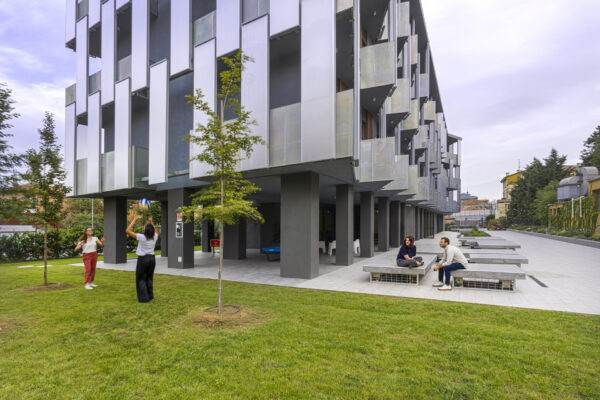
Camplus Bologna Zamboni
A rainwater recovery system that allows the reuse of meteoric waters for irrigation and toilet flushing systems, generating savings in water consumption.
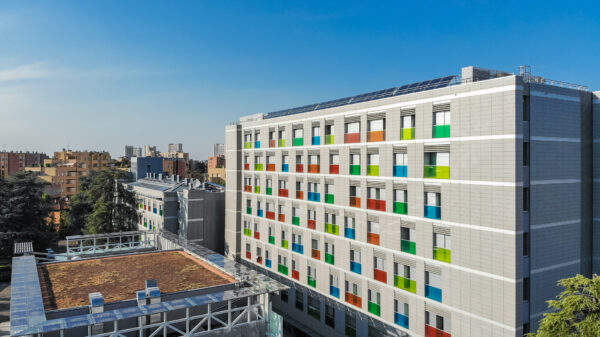
Camplus Bologna Bononia
In Camplus residences, 1 megawatt of peak power will be installed to self-generate the annual electricity demand of about 500 families.
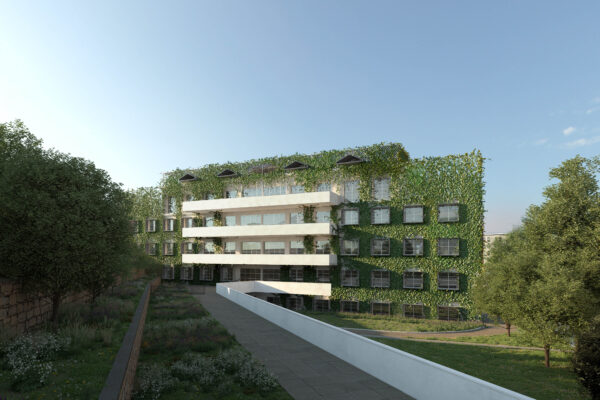
Camplus Rome San Pietro
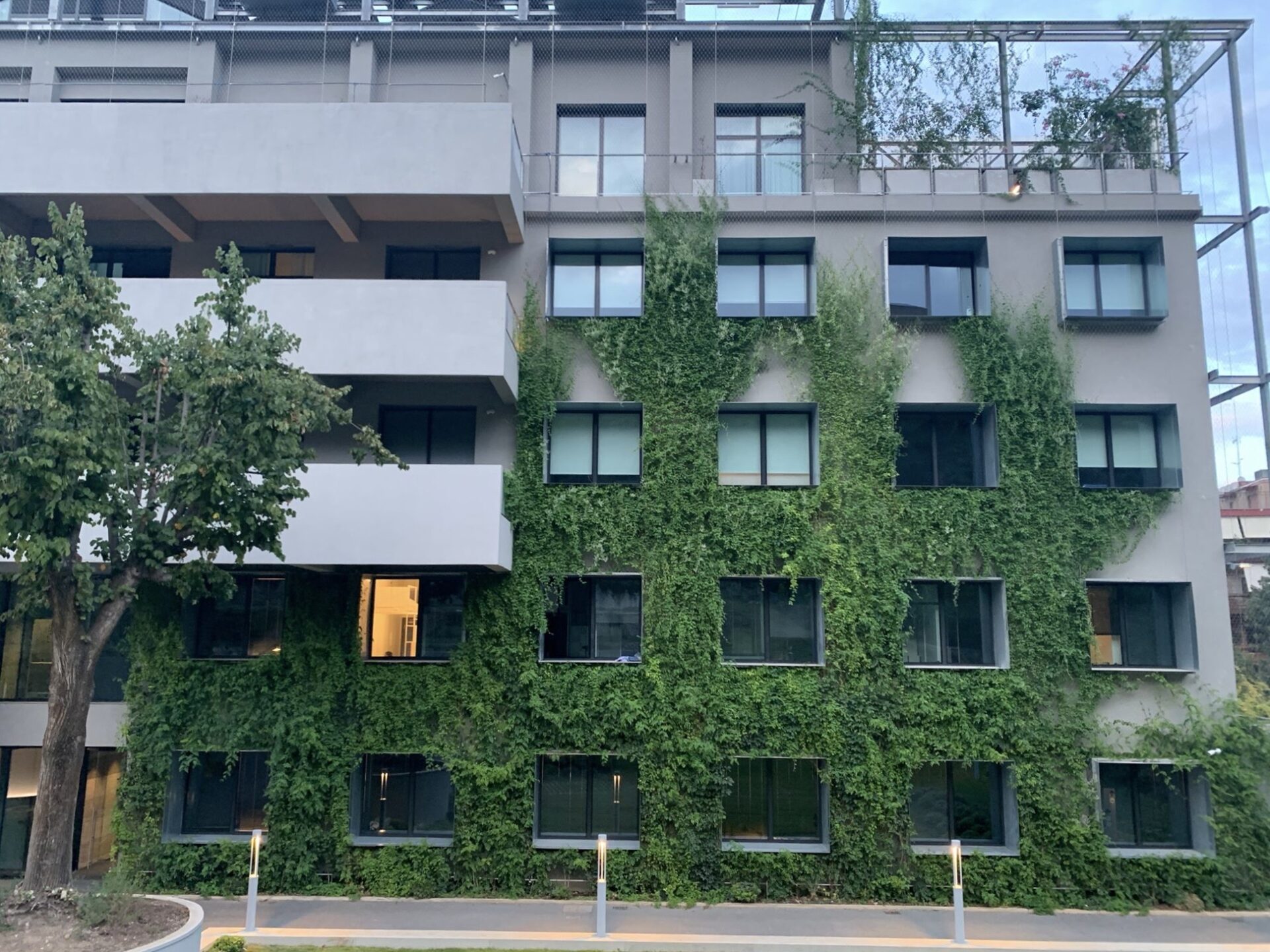
The vertical green wall that characterizes the facade is a green solution that contributes to improving the energy characteristics of the walls of the residence.
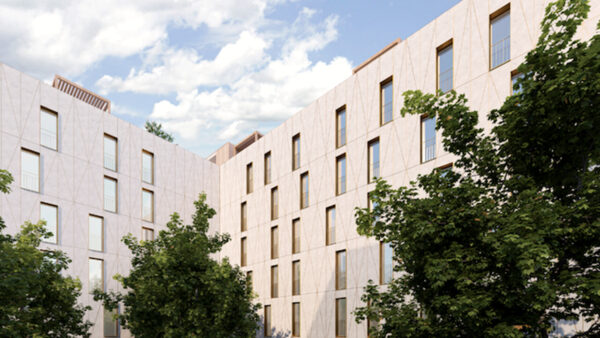
Camplus Padova Turazza
Low-impact structure, built entirely with prefabricated fir wood elements. Classified as an NZEB, it ensures near-zero energy consumption, maximized by the rooftop photovoltaic panels.